
Spatial AI, One Industry at a Time
Most RTLS platforms see the floor. Ubudu acts on it. Each scenario below runs the same loop: a located tag is seen, a rule decides, and a physical device — a pick-to-light LED, an ESL label, a lock — acts, logged with its transmission time.
Every scenario rests on the same foundation — spatial primitives and scalable real-time query tools — driven by a secured, model-agnostic agentic harness that runs on the LLM you choose, cloud or on-prem.

Every Scenario Runs the Same Loop
Trigger → the agent sees verified location → a plain-English rule decides → the located tag acts in the physical world → a measurable outcome, with an audit trail.
1 · Sees
BLE / UWB / GNSS tags report verified position — across eight positioning technologies, badged by source.
2 · Decides
A rule you wrote in plain English — generated and tested by the Rule Agent — matches the condition.
3 · Acts
The same located tag drives a pick-to-light LED, updates an ESL label, or releases a lock.
4 · Logs
The action is correlated by ID, acknowledged, and written to an audit trail (transmission 354 ms).
Concrete Scenarios, Industry by Industry
Each card walks one real trigger from sensed position to physical action. The ROI figures cited are from customer deployments — illustrative of what is possible, not a guarantee for every site.
Manufacturing
Find the calibrated tool, light it up
Trigger: an operator on a European aerospace manufacturer's line needs a specific calibrated torque wrench. Sees: the agent reads the tool's verified BLE position. Decides: a plain-English rule — "the torque wrench must stay in the assembly cell, and its calibration must be in date." Acts: the operator asks for it and the tool's pick-to-light LED turns green for a set duration (1–3,600 s); if calibration has expired, the agent withholds the action and flags it. Outcome: in customer deployments tool search has dropped from roughly 18 minutes to about 4.
- Plain-English rule: zone + calibration window
- Pick-to-light LED on the located tool
- Value stream mapping surfaces WIP bottlenecks
- Every action acknowledged and logged
Logistics
Route the picker, light the bin
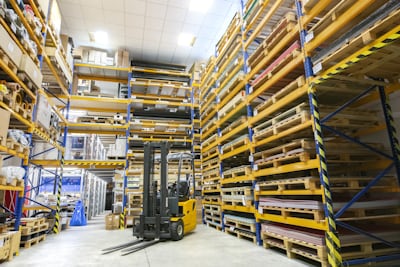
Trigger: a pick wave drops and a picker logs in at the dock. Sees: the agent reads live forklift and tote positions. Decides: it computes an optimized multi-stop route and a rule for each stop on that route. Acts: the bin's pick-to-light LED turns red at each location, and the ESL label updates with the quantity to pull. Outcome: less aisle backtracking and fewer mispicks. A value-at-stake example: if a misplaced container is worth €20k, locating it in minutes instead of hours pays for itself fast.
- Route optimization across stops on live position
- Pick-to-light at each bin, ESL shows the quantity
- Idle-forklift and dwell rules in plain English
- Bidirectional BLE 5.4 PAwR write-path across our UWB/BLE product line
Healthcare
Keep the crash cart ready and in place
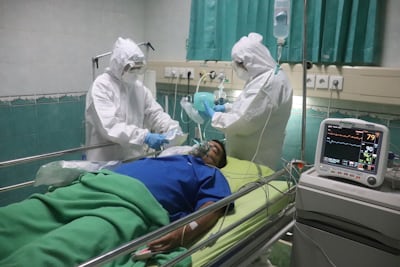
Trigger: a crash cart drifts out of its bay, or its tag's battery falls below 20%. Sees: the agent reads the cart's zone presence and tag battery. Decides: a plain-English rule — "a crash cart must remain on each floor with a charged tag." Acts: the cart's pick-to-light LED flags it for retrieval and an alert routes to on-call staff. Outcome: faster location of critical equipment when seconds count — in customer deployments, around 70% faster asset finding.
- Zone-presence rule per floor, plain English
- Low-battery condition on the located tag
- Pick-to-light retrieval cue on the cart
- GDPR-aligned, deployable on-premise
Retail
Let the shelf label react to the aisle
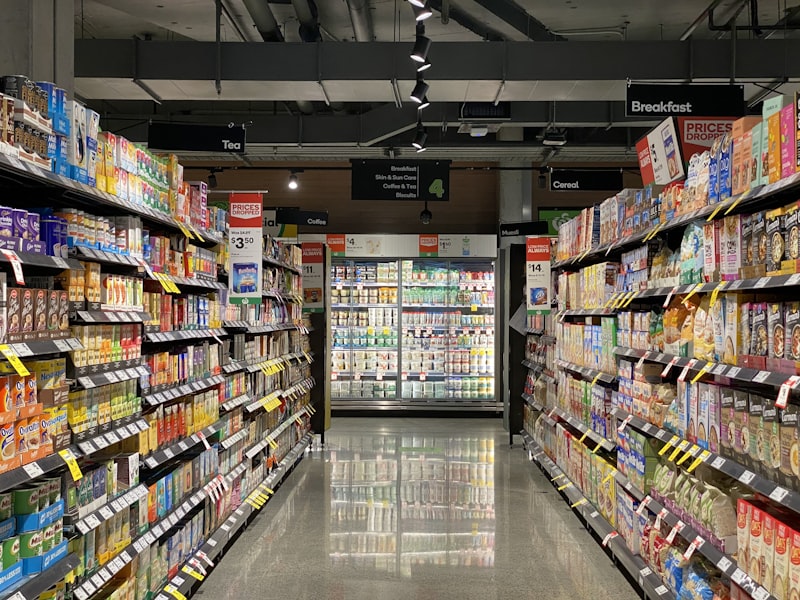
Trigger: dwell time in a category aisle climbs past a threshold during a promo window. Sees: the agent reads zone dwell and shopper-traffic patterns. Decides: a plain-English rule ties the promo content to that aisle and window. Acts: the electronic shelf label updates its content — price, instruction or status — and the update is acknowledged back. Outcome: the right message lands at the right shelf without staff walking the floor to swap tickets.
- ESL content updates tied to dwell rules
- Shopper flow and dwell analytics, self-service
- Bidirectional ESL sync with acknowledgement
- Audit trail per label update
Quick Service Restaurants
Light the next station as the order moves
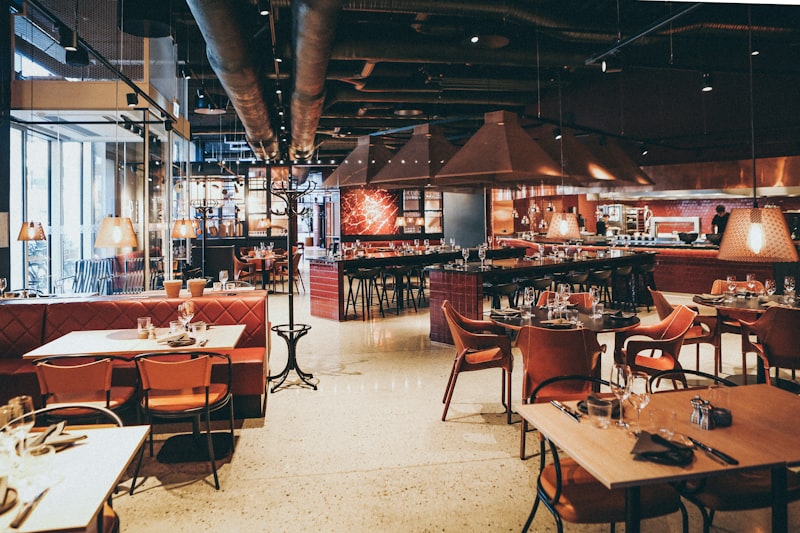
Trigger: a tagged order tray reaches the assembly station, or a tray dwells too long mid-line. Sees: the agent reads the tray's position and dwell against throughput targets. Decides: a plain-English rule — "if a tray waits more than N seconds at a station, cue the next one." When the timing logic gets bespoke, the Script Agent writes and tests a custom event script that runs safely in the real-time engine. Acts: the station's LED indicator turns on to pull the order forward. Outcome: smoother kitchen flow and fewer stalled orders at peak, with throughput visible in the analytics.
- Station dwell rules in plain English
- Custom real-time event logic, authored and tested by the Script Agent
- LED cues drive order-to-serve flow
- Each cue logged with transmission time

Cold Chain
Catch the tote that left the cold zone
Trigger: a tagged tote sits outside the cold zone longer than allowed. Sees: the agent reads zone presence and dwell. Decides: a plain-English dwell rule on the cold-zone boundary. Acts: the tote's pick-to-light LED flags it and an alert routes for return to refrigeration. Outcome: excursions are caught while there's still time to act, reducing product loss.
- Cold-zone dwell rule, plain English
- Pick-to-light flags the tote to return
- Acknowledged, audited action

Construction
Warn the worker before the danger zone
Trigger: a worker's wearable tag enters a dynamic safety zone around moving equipment. Sees: the agent reads worker and equipment positions in real time. Decides: a plain-English proximity rule around each hazard. Acts: the wearable buzzes and the action is logged. Outcome: fewer near-miss incidents around heavy equipment.
- Dynamic proximity zones, plain English
- Wearable alert on the located worker
- Every alert acknowledged and logged

Airports
Place the right GSE at the right stand
Trigger: an aircraft turnaround starts and ground support equipment is needed at a stand. Sees: the agent reads GSE fleet positions across the apron. Decides: route optimization picks the nearest available unit. Acts: the unit's tag is lit and the operator is routed to it. Outcome: shorter equipment search and tighter turnaround windows.
- Nearest-available GSE via route optimization
- Pick-to-light on the located unit
- Idle and availability rules in plain English
AI That Optimizes the Solution Itself
The scenarios above run on the floor today. Two agents on our roadmap (H2 2026) turn the same conversational approach inward — onto how the solution is designed and how the positioning engine is tuned for each site.
Tune the ILS solver to the site
Every deployment is different — concrete walls, racking, metal, mixed BLE and UWB coverage. Today an Ubudu engineer tunes the positioning engine for each site. The upcoming ILS Engine Configurator makes that conversational: describe the symptom ("positions drift in the high-bay aisle"), and the agent guides 100+ parameters across our algorithms and filters — map-matching, particle filtering, fusion — in the C++ multi-hybrid RF RTLS engine.
- 100+ engine parameters, guided in plain English
- Hybrid BLE / UWB tuning per zone
- Map-matching, particle filtering & fusion
- Sharper accuracy is the input every use case above runs on
Optimize the technical solution to the use case
Designing the right solution — anchor density, tag choice, rules, where to put a pick-to-light versus an ESL — draws on a decade of field experience. The upcoming Knowledge Base Agent opens 10+ years of Ubudu deployment know-how and platform documentation conversationally: ask how to approach a use case, or why the system behaves a certain way, and get grounded, cited answers that shape the technical design.
- 10+ years of deployment know-how, on demand
- Grounded, cited answers from full platform docs
- From "what's possible here?" to a concrete design
- For clients, partners and integrators
Two Layers of Value
RTLS delivers operational visibility. Spatial AI adds the write-path and self-service customization on top of the same infrastructure.
RTLS Foundation Benefits
The figures below come from customer deployments of the location layer that Spatial AI builds on. They are illustrative of what is achievable, not a guaranteed result for every site.
Before and After the Write-Path
RTLS that only watches
- Staff watch dashboards for problems
- Find the dot, then walk the floor to act
- Hours spent on manual data analysis
- Rule changes wait on a developer ticket
- No proof the physical action happened
Spatial AI that acts
- The agent watches and flags what matters
- The located tag lights up where you need it
- Analytics and VSM on demand, in minutes
- Operations writes rules in plain English
- Every action acknowledged and logged
Estimate the Value at Stake
Your inputs → a directional estimate, not a quote. Change the numbers below to match your operation. The figures that appear are computed from your inputs to size the opportunity — they are not a Ubudu performance claim. Real results depend on facility size, asset mix and use case, so treat this as a starting point for a conversation.
Illustrative output from the default inputs above — your numbers will differ:
* These outputs are computed from the inputs above as a directional estimate — not a Ubudu performance claim or a quote. The default figures are illustrative; faster asset finding has been observed in customer deployments, but actual results vary by facility size and use case.
How a Scenario Goes Live
From assessment to a rule that lights a tag on the floor.
Assessment
We map your operation, pick a high-impact trigger, and define the outcome that matters.
Deployment
The location layer goes in. If you already run Ubudu BLE / UWB tags and anchors, the agents and physical actions run on that same infrastructure.
Configuration
You describe the rule in plain English; the Rule Agent generates and tests it; you publish it. No JSON by hand.
Act & Audit
When the condition fires, the tag lights up, the label updates, or the lock releases — each action acknowledged and logged.
Who It's For
Pick the path that matches how you'll use it.
Operations teams
Write rules in plain English and act on the floor — without a developer in the loop.
Meet the agentsIntegrators & partners
Build on the open REST API, SDK and MCP server — no rip-and-replace of your stack.
Developer hubTechnical buyers
Multi-technology BLE / UWB / GNSS and cloud-to-on-prem deployment with EU data sovereignty.
The architecture